

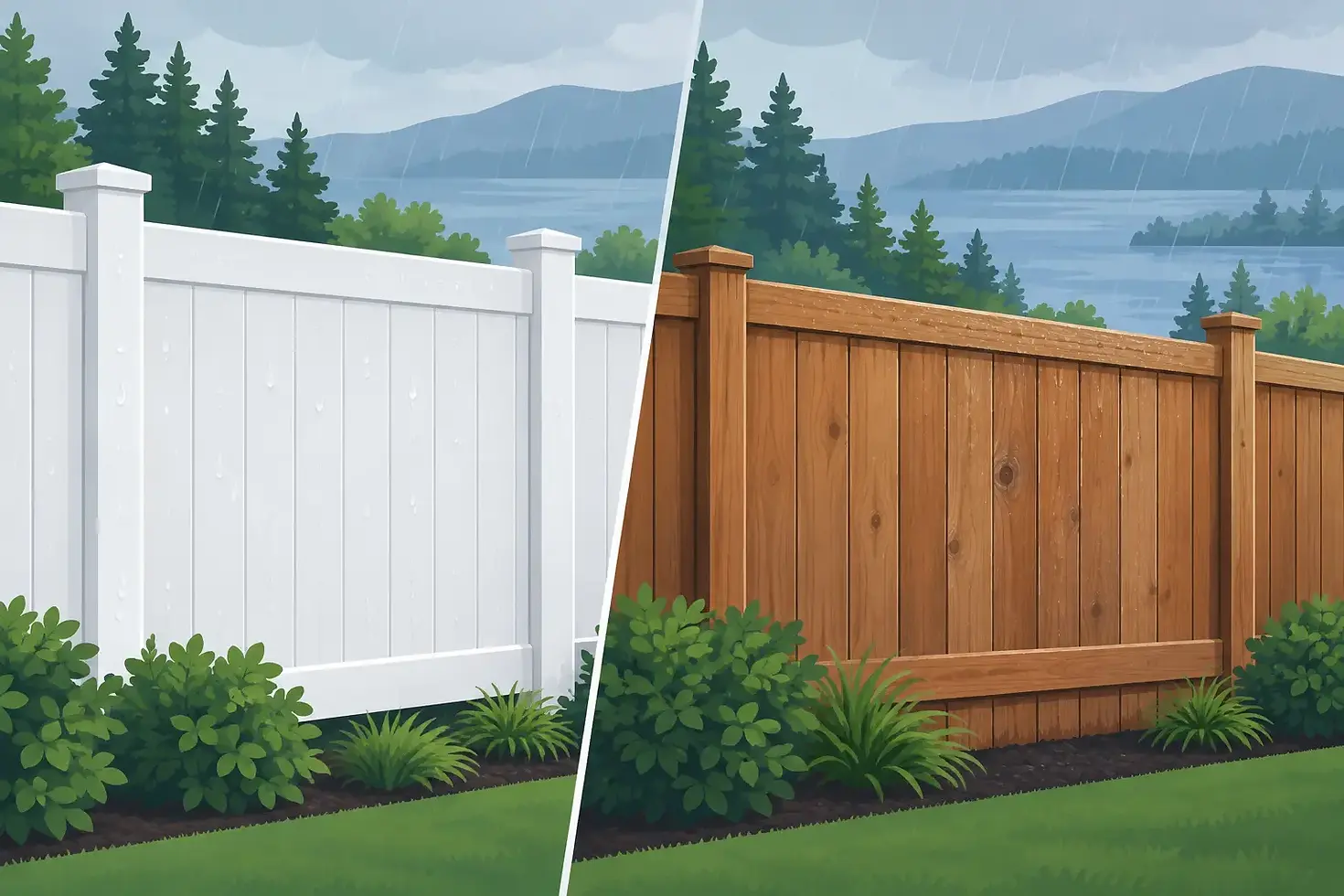
Vinyl Versus Wood Fencing for Wet Climates

A fence can look complete on handover day and still become the callback waiting to happen. In Greater Vancouver and across coastal British Columbia, prolonged rain, ground movement, wind exposure, and freeze-thaw cycles quickly expose weak materials and rushed structural decisions. The practical question behind vinyl versus wood fencing is not simply which one looks better. It is which system will protect the installation, the client relationship, and the project margin five or ten years from now.
Wood remains a familiar, flexible fencing material, and it still has a place on the right property. Vinyl has become the stronger choice for many privacy-fence projects where clients want a clean finish without the recurring maintenance burden. The best recommendation depends on the site, the design target, the budget, and the quality of the system behind the panels.
Vinyl Versus Wood Fencing: The Core Difference
Wood fencing is an organic material. Even quality cedar or pressure-treated lumber changes as it takes on and releases moisture. Boards can shrink, cup, split, check, or twist. Posts can decay at grade if drainage, treatment, and installation are not handled correctly. A wood fence can be built to perform well, but it needs ongoing attention to stay that way.
Vinyl fencing, particularly a virgin PVC system designed for exterior use, does not absorb water like wood. It will not rot, splinter, or require staining and repainting. For homeowners, that means less weekend maintenance. For contractors, it can mean fewer service calls related to warped boards, peeling finishes, and moisture-driven deterioration.
That distinction matters in wet climates. Rain alone is rarely the only problem. Moisture collects around posts, soil shifts through seasonal cycles, and repeated wet-dry exposure stresses every connection. A fence system needs more than attractive panels. It needs posts, rails, brackets, gates, and reinforcement that can handle real job-site conditions.
Upfront Cost Versus Lifecycle Cost
A basic wood fence often carries a lower material cost at the start, especially when compared with a premium vinyl privacy system. That can make wood an easy choice for a budget-sensitive project, a temporary boundary, or a property where a custom painted or stained finish is essential.
The first price is not the full cost, though. Wood fencing requires regular cleaning, staining, sealing, painting, and selective board replacement over its service life. The frequency depends on species, exposure, finish quality, and maintenance habits, but the labor and materials add up. If the owner delays that work, weathering accelerates and the fence appearance declines.
Vinyl typically requires more upfront investment, but its maintenance profile is far more predictable. Routine cleaning with water and a mild soap is usually enough to keep it presentable. For clients planning to hold a property long term, the lower maintenance demand can justify the initial spend. For builders and landscapers, offering both price points creates a clearer conversation: wood can reduce day-one cost, while vinyl can reduce ownership cost and future upkeep.
A contractor should also account for warranty expectations and callback exposure. Replacing several bowed wood boards after a wet season may not be a major material expense, but the truck roll, labor, scheduling friction, and reputation cost are real. Premium materials should help protect margins after the final invoice.
Weather Performance in Coastal and Freeze-Thaw Conditions
Wood can perform reliably when the correct species, fasteners, coatings, and drainage details are used. Cedar is naturally resistant to decay, while pressure-treated lumber provides useful protection where posts contact soil. Neither option is maintenance-free. End cuts, fastener penetrations, close ground contact, and poorly ventilated areas remain vulnerable points.
Vinyl offers a major advantage against moisture because the material does not decay. It is especially practical for solid privacy layouts, where wood boards may stay damp longer due to limited airflow. A quality vinyl system should also use UV-stabilized material so the color and surface hold up under sun exposure rather than becoming brittle or fading prematurely.
Cold weather introduces another consideration: PVC expands and contracts with temperature changes. This is not a defect. It is a material behavior that must be built into the installation. Panels need properly sized expansion slots or routing, and rails need room to move as designed. Cutting every rail too tight or fastening components in ways that prevent movement can create stress and visible issues later.
This is where system quality separates a fence that merely looks like vinyl from one suited to demanding conditions. Reinforced structural posts, compatible rail connections, engineered gate frames, and clear installation specifications matter. Large gates should not rely on hollow vinyl alone. Aluminum or steel reinforcement, depending on the design, helps prevent sagging and keeps gates operating properly through repeated use.
Appearance and Design Flexibility
Wood is difficult to beat when the project calls for a truly custom aesthetic. It can be built in nearly any height, pattern, or board configuration. Horizontal slats, framed lattice, stepped sections, decorative caps, and custom stains are all accessible to a skilled installer. On heritage properties or natural landscape designs, wood can feel warmer and more integrated than a bright white fence.
The trade-off is that wood’s appearance changes with weather. A rich stain will fade, and paint needs renewal. Even when clients accept a weathered look, uneven aging can make a once-crisp fence look neglected.
Vinyl delivers consistency. White privacy fencing remains a strong choice for clean-lined residential projects, pool surroundings, side yards, and new construction communities. Modern vinyl systems may also offer neutral colors, textured finishes, and decorative top treatments. The visual result is orderly and uniform, which appeals to clients who want a finished exterior without planning future refinishing work.
For design professionals, it helps to set expectations early. Vinyl does not replicate the grain variation and natural character of real wood. If the client wants a material that develops patina, wood may be the better fit. If they want the same polished appearance year after year with minimal care, vinyl is usually the more logical recommendation.
Installation Factors That Affect Both Materials
Neither material performs well when the structure below grade is wrong. Posts must be set for the local conditions, aligned accurately, and supported by a foundation appropriate to fence height, wind load, soil type, and gate weight. A premium panel cannot compensate for undersized posts or shallow footings.
With wood, installers need to allow for board movement and avoid details that trap water. Corrosion-resistant fasteners are essential, particularly near the coast. Rails and boards should be selected for the span and exposure rather than simply using the lightest available profile.
With vinyl, accurate layout is equally important because panel systems are less forgiving of inconsistent spacing. Confirm actual post-to-post dimensions before setting the run. Use manufacturer-approved components, allow for thermal movement, and plan gate openings around reinforced posts and hardware requirements. When a project has slopes, corners, retaining walls, or oversized gates, resolve those details before material is ordered.
Supply planning also matters. A missing rail, post insert, or gate component can stop a crew as effectively as bad weather. Locally stocked, matched systems reduce substitutions and help projects stay on schedule. That reliability is particularly valuable for contractors coordinating fencing with landscaping, concrete, decks, and final inspections.
When Wood Is the Better Call
Wood remains a sound choice when the project needs a custom profile, a stain-matched finish, or an economical short-term solution. It can also be easier to modify on site for unusual lot lines and one-off architectural details. A homeowner who enjoys maintaining exterior wood may see refinishing as part of caring for the property rather than a burden.
It is less attractive when the client expects no maintenance, the fence will receive constant moisture exposure, or the installation includes high-visibility areas where warped boards and finish failure will quickly draw complaints. In those cases, lower initial cost can become a false economy.
When Vinyl Is the Better Call
Vinyl is a strong fit for privacy fencing, pool-adjacent enclosures, new developments, rental properties, and homeowners who prioritize low maintenance. It also works well when a contractor needs a repeatable, installation-ready system with consistent components and a predictable finish.
Choose a reinforced, contractor-grade system for tall privacy runs, windy sites, and any gate that will see regular traffic. Thin-wall panels and unreinforced gate structures may reduce the quote price, but they create risk where the system carries the most load. Empire Gold Crown Building Products supports contractors with locally available exterior systems built around structural performance, not just surface appearance.
The right fence material should make the handover easier, not create a maintenance conversation that starts six months later. Specify wood when its custom character is worth the upkeep. Specify vinyl when the priority is a clean, durable boundary that keeps working through wet seasons, changing temperatures, and years of everyday use.


Comments