

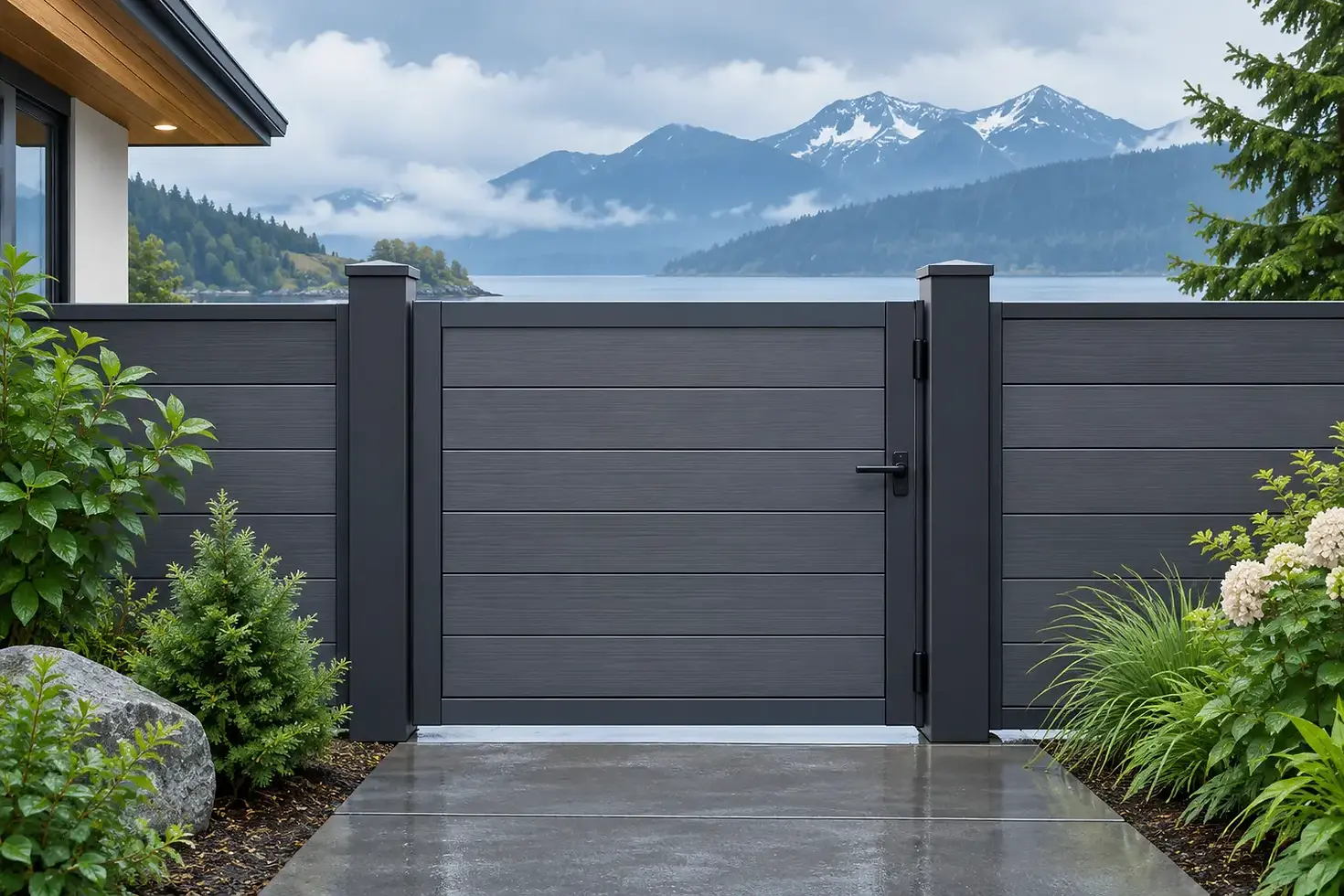
Modern Composite Fence Gate for BC Weather

A fence can look straight, private, and premium on installation day, then lose the effect the first time its gate begins to sag, bind, or rack. A modern composite fence gate must do more than match the surrounding panels. It needs to carry moving weight, hold its alignment through wet seasons and temperature swings, and give the finished project the clean architectural line clients expect.
For contractors, this is where system selection protects the schedule and the callback rate. For homeowners, it is where a low-maintenance privacy fence either performs like a long-term upgrade or becomes the one section that constantly needs adjustment.
Why the Gate Is the Critical Part of a Composite Fence
A fixed composite fence panel is supported along its full width by posts and rails. A gate is different. Its entire load transfers through hinges, a latch, a frame, and the hinge-side post. Every opening and closing cycle applies force to those connection points.
Composite boards offer a major visual and maintenance advantage over wood: they do not require regular staining, resist rot and splintering, and maintain a more consistent finished appearance in rain-heavy environments. But boards alone do not create a reliable gate. If a gate is assembled like a standard fence panel and simply hung on hinges, it can deflect under its own weight. The result is uneven reveals, dragging at the latch side, hardware strain, and a frustrating handoff to the client.
The right approach is to treat the gate as a structural assembly. The visible composite surface provides privacy and design continuity. The internal frame, reinforced posts, hardware, fasteners, and allowance for material movement determine whether it keeps working season after season.
What to Specify in a Modern Composite Fence Gate
The best gate specification starts with the opening, not the board color. Gate width, height, swing direction, wind exposure, slope, use frequency, and access requirements all affect the right structural package.
Reinforced Internal Framing
A composite gate should have a purpose-built metal frame or internal reinforcement designed to carry the boards without relying on the boards as structural members. Aluminum reinforcement is often the practical choice because it is lightweight, corrosion-resistant, and compatible with a clean contemporary profile.
Look for a frame that supports the full gate perimeter and controls racking. Larger or taller gates may need additional bracing or a reinforced mid-rail, especially where solid privacy infill creates a broad surface for wind loading. A diagonal brace can be useful, but it should be integrated cleanly so it does not compromise the modern, horizontal look on the finished face.
The hinge-side post matters just as much. A heavy gate attached to an undersized or poorly anchored post will eventually move, no matter how good the frame is. Specify posts and post reinforcement as part of the gate system, with footings suited to local soil conditions, frost movement, and the gate load.
Controlled Expansion and Drainage
Composite materials expand and contract with temperature changes. In British Columbia, a fence can also face prolonged rain, standing moisture, freeze-thaw cycles, and occasional heat exposure. A gate built too tightly may bind or show waviness as conditions change.
Installation-ready systems account for movement with properly placed expansion gaps, slotted connections where required, and board details that do not trap water. The goal is not to eliminate movement. It is to control it so the gate continues to operate and the visible spacing remains intentional.
Drainage deserves attention at the bottom rail, post caps, and any horizontal areas where water can collect. This is a small specification decision that helps prevent staining, trapped debris, and premature hardware issues.
Hardware Rated for Real Use
Hinges and latches are not finishing accessories. They are load-bearing working components. Select hardware rated for the actual gate size and anticipated use, not just the minimum weight listed on a package.
Self-closing hinges may be appropriate for pool-adjacent applications, subject to local code requirements. Soft-close hardware can improve the user experience on premium residential projects, but it still needs a rigid, properly aligned frame to work correctly. For high-use side-yard or service access gates, prioritize durable hinges, adjustable mounting points, and a latch that can tolerate repeated use without loosening.
A keyed lock, privacy latch, or integrated handle should be chosen early. Retrofitting hardware after the gate is clad can create unnecessary drilling, visible fasteners, and avoidable rework.
Design Decisions That Keep the Fence Looking Intentional
The most successful modern gate disappears into the fence line when closed, while remaining easy to find and operate. That requires deliberate alignment of board spacing, top rails, side reveals, and hardware placement.
Horizontal composite boards are a common choice for contemporary privacy fencing because they visually widen a yard and complement modern homes, decks, pergolas, and aluminum railing systems. On a gate, those horizontal lines should continue cleanly from the adjacent panels. A misaligned top board or inconsistent gap may seem minor during installation, but it becomes obvious from the street and patio.
Color selection also needs a practical lens. Darker tones can create a strong modern contrast and conceal some surface dirt, but they may show dust, water spotting, or pollen differently than mid-tone finishes. Lighter tones can brighten enclosed yards but may require more attention around high-traffic latch areas. Samples should be reviewed against the home's siding, trim, masonry, decking, and outdoor kitchen finishes rather than selected in isolation.
For projects requiring a more open look, a framed gate with aluminum decorative elements or a partial screen detail can reduce visual mass. For privacy-focused sites, full-height composite infill remains the better fit, provided the frame and posts are engineered for its weight and wind exposure.
Installation Details That Prevent Callbacks
Most gate failures are not caused by one dramatic mistake. They come from small shortcuts that stack up: a post that is slightly out of plumb, a frame that was not checked for square, hinges mounted before the final gap was confirmed, or boards fastened without allowance for movement.
Set and brace gate posts with more care than standard line posts. Verify plumb in both directions before the footing cures, and recheck the opening at the top, middle, and bottom. If the opening is not consistent, the gate may look correct at one point and rub at another.
Build the frame square on a flat surface, then dry-fit it in the opening before final cladding and hardware installation. Confirm the intended clearances around all sides, accounting for seasonal movement and any slope beneath the gate. A gate that clears a finished surface by only a fraction can become a service call after settlement, frost heave, or the addition of landscaping material.
Use compatible corrosion-resistant fasteners and avoid overdriving them into composite boards. Fasteners need to secure the cladding without restricting the movement the system was designed to accommodate. Keep cut edges clean, use approved caps or trims where specified, and protect the finished surface during handling. These details support a premium handoff and reduce time lost correcting cosmetic damage on site.
When a Standard Single Gate Is Not Enough
A single walk gate is ideal for pedestrian access, bins, and most side-yard entries. It is not always the right answer for equipment access, wide rear-yard openings, or projects where the gate becomes a major focal point.
Double gates can provide a wider opening but require careful coordination at the meeting point, drop rod location, latch arrangement, and ground clearance. Because each leaf moves independently, post stiffness and frame alignment become even more critical. On windy or exposed properties, consider how the client will secure the gates when open and whether a smaller everyday access gate should be included beside a larger service opening.
Very wide or unusually tall composite gates may require a different solution altogether, such as dividing the opening, adding a steel support strategy, or using a lighter infill approach. The cleanest design is not automatically the one with the fewest posts. It is the one that delivers the required access without creating a maintenance liability.
Supply Planning Is Part of Gate Performance
A gate package is only installable when the boards, frame components, reinforced posts, hardware, trims, and matching fence materials arrive together. Missing one specialized hinge or frame member can hold up the final section of a project and leave crews returning for work that should have been completed during the original mobilization.
For contractors, confirm the complete bill of materials before ordering. Include swing direction, finished opening size, gate count, frame configuration, post reinforcement, hardware finish, and any code-driven requirements. Ordering the gate as part of an integrated fencing system also improves color consistency and keeps the design language consistent across the full property.
Empire Gold Crown Building Products supports trade projects with locally stocked exterior systems built for the wet, coastal, and freeze-thaw conditions contractors face across British Columbia. That supply reliability matters when a gate is the last detail standing between a nearly complete fence and a delayed handoff.
A well-specified composite gate should feel uneventful after installation: it closes cleanly, lines up with the fence, resists the weather, and lets the rest of the project speak for itself. That is the standard worth building into the quote before the crew reaches the job site.


Comments