

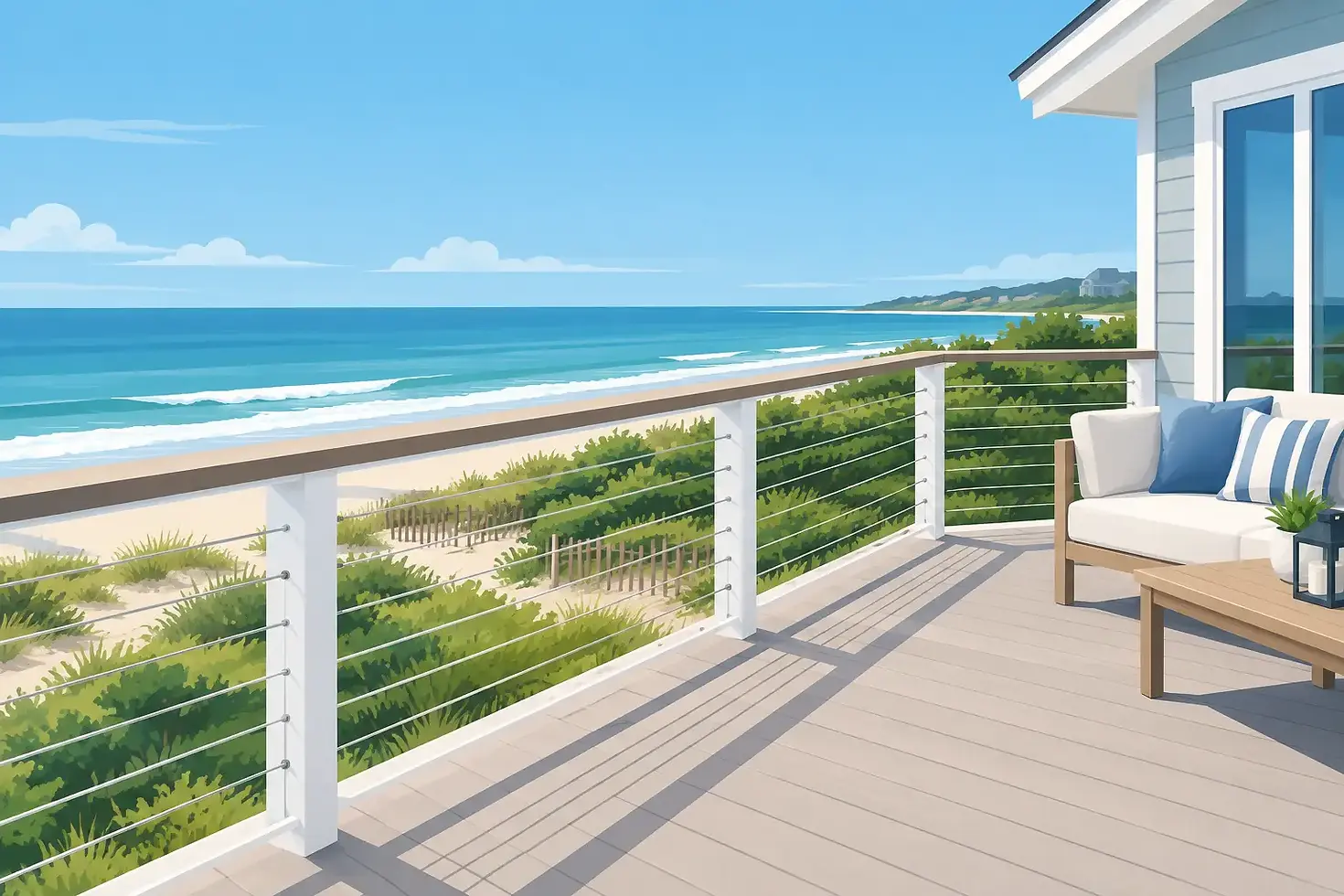
Deck Railing for Coastal Homes That Holds Up

A railing can look finished on installation day and start costing the owner money much sooner than expected. Salt-laden air, wind-driven rain, standing moisture, and repeated wet-dry cycles expose weak coatings, undersized posts, and poorly planned connections fast. The right deck railing for coastal homes has to do more than meet a visual brief. It needs to protect the deck edge, remain rigid under daily use, and hold its finish through the conditions that make coastal projects demanding.
For contractors and builders, that performance starts before the first post is set. Railing selection affects blocking requirements, deck framing, inspection timing, labor hours, material availability, and the long-term reputation attached to the job. A lower upfront material cost means little when replacement parts, callbacks, or rust stains arrive a season later.
What Coastal Exposure Does to Railing Systems
Coastal weather is not one condition. It is a combination of moisture, airborne salt, ultraviolet exposure, gusting wind, and temperature movement. In some regions, winter freeze-thaw adds another layer of stress. Water enters small gaps, freezes, expands, and puts pressure on fasteners and post connections. Where drainage is poor, the problem compounds.
Salt is especially hard on exposed metal components. Bare steel fasteners, thin painted hardware, and unprotected cut edges can corrode before the railing itself appears compromised. That corrosion can spread below coatings, create visible staining on deck boards, and weaken the components that keep the guard system secure.
Wind matters just as much. A coastal deck often has less shelter than a backyard patio, particularly on elevated homes, view properties, and waterfront builds. Railings must be properly engineered and anchored for guard loads, but installers should also account for the practical force of wind acting on open spans, glass infill, privacy panels, and gates. A clean modern profile is valuable only when the structure behind it is built to stay firm.
The Best Materials for Deck Railing for Coastal Homes
No material is maintenance-free in a true coastal environment. The better question is which system gives the project the right balance of corrosion resistance, structural strength, appearance, and serviceability.
Heavy-duty aluminum is the dependable all-around choice
Powder-coated aluminum railing is a strong fit for many coastal residential projects because it does not rust like ferrous metal. It offers crisp lines, stable post profiles, and a broad range of infill options without the ongoing sanding and repainting associated with wood. For contemporary decks, black, bronze, and textured finishes can frame the view without visually crowding the space.
The details matter. Specify a heavy-duty system with substantial posts, properly designed brackets, coated fasteners, and components made for exterior exposure. A thin railing may look similar in a showroom but can flex more at long runs, feel less solid at hand contact, and leave less margin for demanding sites. Reinforced aluminum systems are particularly useful where a contractor needs confidence in post rigidity and faster repeatable installation.
Aluminum is not invincible. Salt deposits should be rinsed off periodically, especially on exposed waterfront elevations. Scratches should be addressed before they become a long-term finish issue. The advantage is that routine care is straightforward and the railing does not require the cyclical coating work expected with painted wood or ordinary steel.
Vinyl and PVC fit specific design priorities
Virgin PVC or vinyl railing can work well where the client wants a traditional white look and low-maintenance surfaces. It will not rot and is unaffected by salt in the same way as steel. However, coastal installations need a system that accounts for expansion and contraction. Long runs, dark colors, full sun, and changing temperatures can all increase movement.
The strongest PVC railing installations use reinforced posts or internal structural support where required, along with manufacturer-approved brackets and expansion allowances. Avoid treating PVC as a structural shortcut. A bulky profile may conceal weak reinforcement, and a railing that moves excessively at the post will not inspire confidence with the homeowner or inspector.
Composite is usually better as an accent than the full guard system
Capped composite components can coordinate beautifully with composite decking, especially when used for top caps, privacy screens, or integrated design details. But composite is heavier than many installers expect and expands differently than aluminum. It also requires adequate support over longer spans.
For many projects, a practical approach is a structural aluminum railing frame paired with composite or PVC accent elements. This preserves the clean design intent while keeping the primary guard system engineered around strength, drainage, and efficient installation.
Glass delivers views but raises the specification standard
Glass railing is a natural request for ocean, lake, and mountain-view homes. It can protect sightlines better than pickets, but it should never be treated as a simple upgrade package. The posts, base shoes, glass thickness, edge protection, drainage path, and wind-load requirements need careful review.
Frameless or near-frameless glass systems also require more cleaning in salt-air locations. Owners should understand that spray residue and mineral spotting can be visible, even when the glass is structurally performing as intended. For clients who value a clear view but want easier upkeep, aluminum pickets with wider spacing or cable-style designs may be worth discussing where local code allows them.
Start With the Deck Structure, Not the Railing Color
A rail is only as reliable as the framing and attachment below it. This is where coastal deck projects are won or lost. Before ordering material, confirm the finished deck height, guard requirements, stair layout, rim-joist condition, waterproofing details, and any need for surface-mounted versus fascia-mounted posts.
Surface-mounted posts simplify some installations, but they concentrate force at the deck edge. The framing below must include the required blocking, bolts, tension hardware, or engineered connection method. Fascia mounting can preserve usable deck space and create a cleaner board layout, yet it also requires strong rim framing and carefully planned flashing so water does not become trapped behind the rail attachment.
Contractors should coordinate railing posts before decking goes down whenever possible. Preplanning avoids cutting boards around posts after the fact, keeps seams intentional, and reduces rework around stair landings. On a composite deck, it also prevents the common mistake of relying on deck boards to carry railing loads. Guard posts belong in the structure, not simply through the finished surface.
Specify Hardware for the Conditions You Actually Have
A premium railing system can still fail early if the hardware package is an afterthought. Coastal work calls for corrosion-resistant fasteners, anchors, screws, and connectors appropriate for the railing material and mounting surface. Mixing metals without considering galvanic corrosion can create avoidable problems, particularly where dissimilar components remain wet for extended periods.
Use manufacturer-approved hardware whenever possible. It protects the engineered connection, speeds up installation, and reduces guesswork when crews are working through a large deck or several homes in a development. If substitutions are necessary, confirm compatibility rather than assuming a general exterior screw will perform the same way.
Drainage deserves the same attention. Posts, base plates, brackets, and glass channels should not create pockets that hold water and debris. A small gap, a planned weep path, and correctly installed caps can make a major difference over years of exposure. These are not cosmetic details. They are service-life details.
Design for Safety Without Losing the Coastal View
Homeowners often arrive with two priorities: preserve the view and keep the railing visually minimal. Builders have to add a third: deliver a guard system that meets applicable local code and is installed exactly as intended. That may affect rail height, picket spacing, climbability rules, stair transitions, graspable handrails, and gate hardware.
The most successful design conversations happen early. Show clients where a full-height privacy screen makes sense, where open pickets protect airflow, and where a glass section earns its added cost. A mixed system can be the best answer: solid or privacy infill near neighboring properties, durable aluminum pickets around most of the perimeter, and view-focused glass only at key sightlines.
This approach can also protect the budget. Instead of paying for glass around every edge, the project puts premium materials where they make the biggest visual difference while maintaining a consistent railing language across the deck.
Plan Supply and Installation as One Scope
Railing delays are expensive because they often land at the end of a project, when inspections, landscaping, occupancy, or client handover are already scheduled. A missing stair bracket, damaged post, or unavailable infill package can hold up the final stretch of work.
Build the takeoff around the complete system: line posts, corner posts, end posts, stair posts, top and bottom rails, infill, brackets, post caps, anchors, handrail components, and spares for field adjustments. Confirm lead times before committing to the installation date, especially for custom colors, glass panels, and specialty transitions.
Empire Gold Crown Building Products supports coastal projects with contractor-oriented railing systems and locally stocked material planning designed to reduce those avoidable job-site gaps. For repeat builders, standardizing a few proven railing configurations can also improve estimating accuracy, train crews faster, and protect margins from one project to the next.
A coastal railing should feel solid on day one, still look intentional after years of rain and salt exposure, and avoid becoming the last unresolved item before turnover. Specify the structure and hardware with the same care as the visible finish, then give the owner a simple maintenance plan. That is how a good-looking deck remains a dependable part of the home rather than a future service call.


Comments